Quantitative Battery
CogAT Number Series, Explained
A sequence follows a pattern; your child predicts what comes next. Early grades use beads or pictures; later, numbers with skips, alternations, or growing steps.
A worked example
Example: 2, 4, 6, 8, ? (9, 10, 12, 16)
Show the answer and reasoning
Answer: 10
Find the step by checking each neighbor pair: +2, +2, +2. Steady steps mean the next is 8+2=10. When steps aren't steady, check whether they alternate (+2, +3, +2, +3…) or grow (+1, +2, +3…) — saying the steps aloud reveals the shape.
An original Archer Anthem illustration of the format — on the assessment these appear as pictures for young test-takers.
Common mistakes
- Looking only at the last two numbers instead of the whole series
- Missing alternating patterns because the first step was assumed to repeat
Parent tip: Clap-pattern games are number series without numbers — clap-clap-snap, clap-clap-snap, what comes next? The transfer is direct.
The other CogAT subtests
Start from the beginning: the CogAT parent's guide · NNAT vs CogAT
CogAT practice books
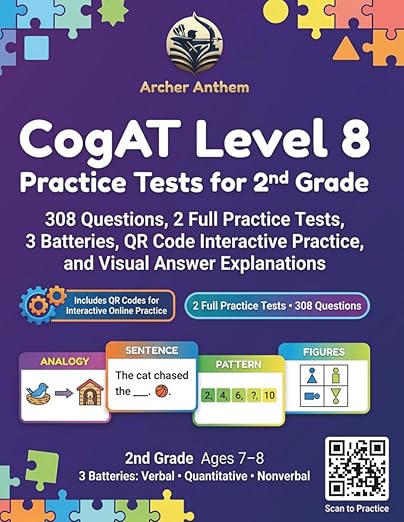
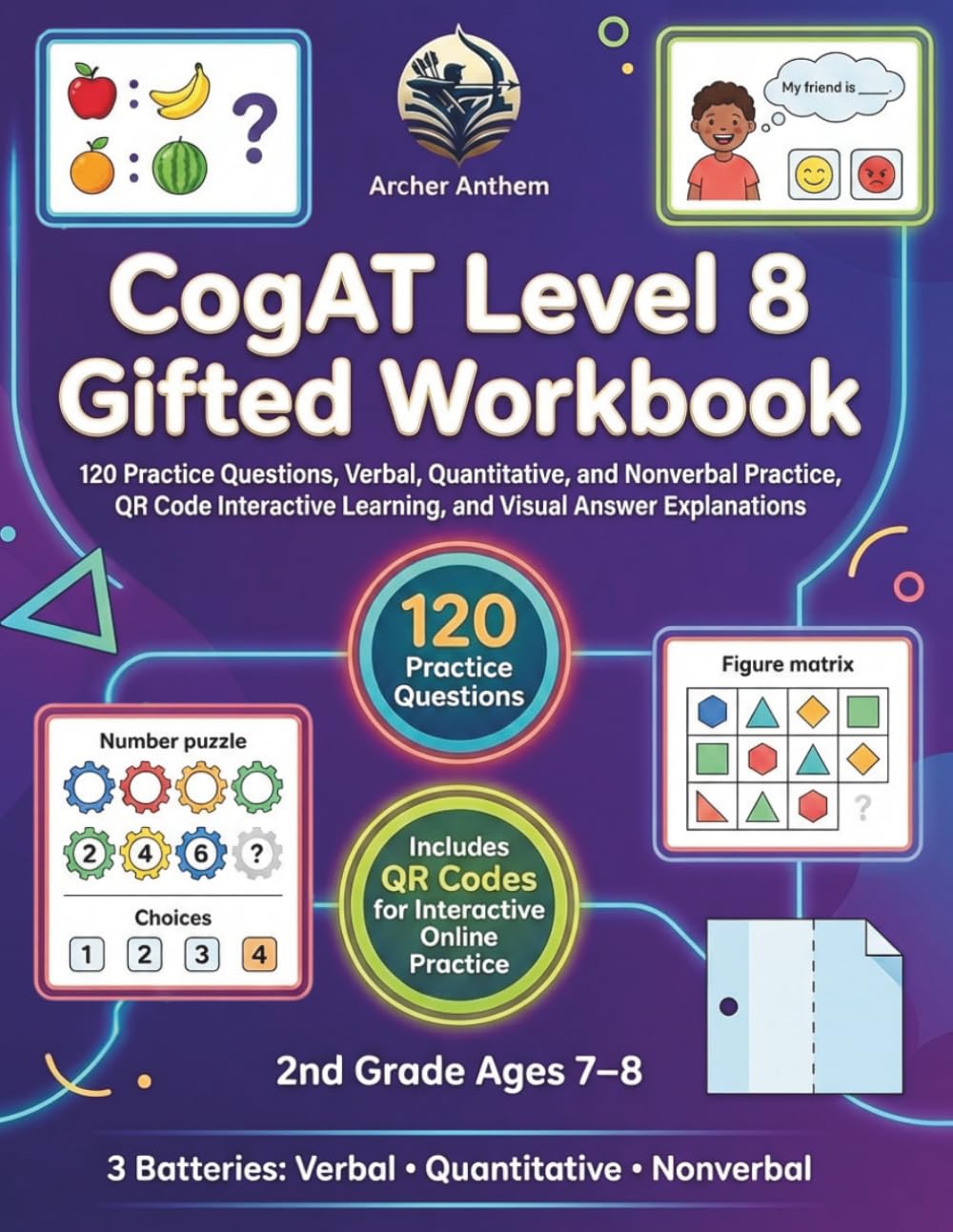
Get free printable practice samples
Sample pages from our practice books by email — see the question style before you buy anything.
Get free samplesNNAT® (Naglieri Nonverbal Ability Test®) is a registered trademark of Pearson Education, Inc. CogAT® (Cognitive Abilities Test™) is a registered trademark of Riverside Assessments, LLC. Neither Pearson nor Riverside is affiliated with, nor do they endorse, Archer Anthem. Archer Anthem materials are independent practice resources in the style of these assessments.